The Long Distance Entrepreneur
From the outset the get go you need to put these important factors in place you will get it right and not haunt you later

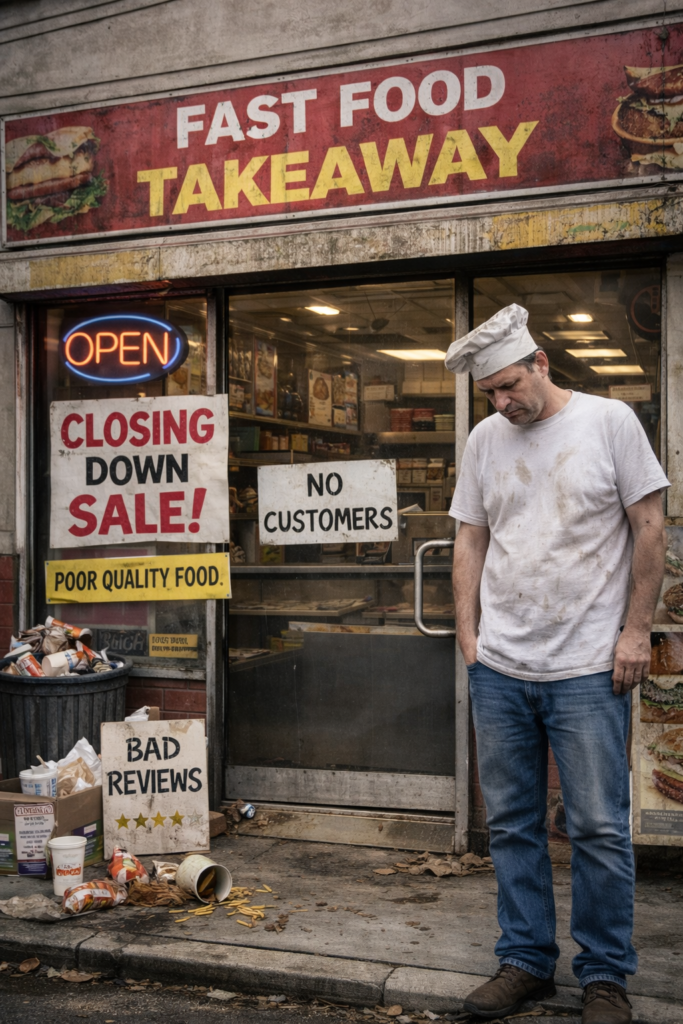

How Local and Small Businesses Can Survive and Grow
Running a local or small business can feel like a constant battle.
Rising costs, stronger competition, changing customer habits and increasingly powerful online businesses can make it difficult for an independent business to survive — let alone grow.
But being small also gives you advantages that larger businesses can struggle to replicate.
You can know your customers personally. You can react quickly. You can change your products and services without going through layers of management. You can build genuine relationships within your community.
And you can create something large businesses often find difficult to manufacture:
a memorable customer experience.
Survival isn’t simply about selling more.
It is about understanding your customer, controlling your costs, knowing your weaknesses, watching your competition, marketing intelligently and continually asking one important question:
“If I were the customer, would I choose my own business?”
That question can reveal more about your business than almost any spreadsheet.
Here are some practical areas every local and small business should be examining.
1. Start With the First Impression
Before someone buys from you, they have already formed an opinion about your business.
Your shopfront, signage, logo, website, social media, packaging, vehicle and even the way you answer the telephone are all communicating something.
Ask yourself:
What does my business say about me before I have spoken to the customer?
Is it professional?
Is it welcoming?
Is it easy to understand?
Does it look cared for?
You don’t necessarily need an expensive redesign.
Sometimes better lighting, clearer signage, a more professional logo, better displays or consistent branding can make a surprisingly big difference.
Your branding should help people recognise you wherever they encounter your business.
2. Don’t Just Sell a Product — Create an Experience
A customer may be able to buy the same product somewhere else.
So why should they buy it from you?
The answer could be the experience you create around the product.
Think about the entire customer journey.
What happens when they first discover you?
What happens when they make an enquiry?
How easy is it to buy?
How are they treated?
What happens afterwards?
A café can remember a regular customer’s order.
A hairdresser can remember how a customer likes their hair.
A tradesperson can keep a customer informed throughout a job.
A shop can make the presentation and packaging part of the experience.
These details can turn an ordinary transaction into something memorable.
And memorable businesses are more likely to be talked about.
3. Personalise Your Business
One of the biggest advantages of a small business is the ability to be personal.
People don’t want to feel like an account number.
They want to feel recognised.
Learn names.
Remember preferences.
Ask customers how something worked for them.
Follow up after an important purchase.
If something goes wrong, deal with it personally.
The objective isn’t simply to make a sale.
It is to create a customer who thinks:
“I like dealing with them.”
That is the beginning of loyalty.
4. Know Your Costs — Religiously
A business can have plenty of sales and still get into financial trouble.
Why?
Because revenue isn’t profit.
Every business owner needs to understand where the money is going.
- Rent.
- Wages.
- Stock.
- Utilities.
- Transport.
- Insurance.
- Software.
- Advertising.
- Bank charges.
- Taxes.
- Professional services.
Small costs can become significant when they are repeated every month.
Review them regularly.
Ask:
Do we still need this?
Can we get it cheaper?
Is it generating value?
Is there waste?
Controlling costs isn’t about cutting everything.
It is about making sure the money you spend is working for the business.
5. Get Good Accountancy Support
Good financial information should help you make decisions — not simply complete an annual obligation.
You should understand:
Your profit margins
Your cash position
Your biggest costs
Which products or services make money
Whether customers are paying on time
Where costs are increasing
What you can realistically afford
A good accountant or financial adviser can help you see things that are difficult to see when you are busy running the business.
Don’t wait for a financial crisis before looking closely at the numbers.
6. Look Hard at Your Weaknesses
Every business has weaknesses.
The problem is that business owners sometimes become so close to their business that they stop seeing them.
Perhaps enquiries aren’t answered quickly enough.
Maybe the website looks dated.
Perhaps the premises need attention.
Maybe customers are waiting too long.
Perhaps stock control isn’t good enough.
Maybe you aren’t following up with people who have shown an interest.
Find the weakness.
Then shore it up.
Don’t protect your business from criticism.
Use criticism to improve it.
7. Put Yourself in the Customer’s Shoes
This is one of the most useful exercises a business owner can do.
Forget that you own the business.
Become the customer.
Walk into your own shop.
Visit your website.
Call your telephone number.
Send yourself a WhatsApp message.
Try to buy something.
Then ask:
Was it easy?
Could I find what I wanted?
Was the information clear?
Did somebody respond quickly?
Did I feel welcome?
Was payment easy?
Did I feel valued?
Would I return?
Would I recommend this business?
You may discover problems that are almost invisible when you’re looking at the business from the inside.
8. Watch Your Competition
Your competitors can teach you a great deal.
Watch what they are doing.
Look at their:
Products
Services
Prices
Offers
Branding
Websites
Social media
Reviews
Customer service
Response times
Pay particular attention to what their customers are saying.
What do people praise?
What do they complain about?
Then ask:
What are they doing better than me?
And:
What could I do differently?
Don’t simply copy your competitors.
Learn from them.
Sometimes the biggest opportunity is discovering what everybody else is doing — and finding a better way.
9. Make Marketing a Habit
Marketing shouldn’t suddenly begin when sales fall.
It should be part of running the business.
And marketing doesn’t necessarily mean spending large amounts of money.
For a local business, marketing can include:
Google Business Profile
Local Facebook groups
Social media
Local publications
Community websites
Local events
Partnerships
Customer referrals
Reviews
Email
WhatsApp
Word of mouth
The important question isn’t:
“How many people saw my advert?”
It is:
“Did the right people see it, and did it produce anything?”
Measure what you can.
If something repeatedly costs money without producing results, question it.
10. Don’t Underestimate Word of Mouth
One happy customer can become much more than one sale.
They can tell their partner.
Their family.
Their friends.
Their neighbours.
Their colleagues.
That is why customer experience is itself a form of marketing.
Give people something worth talking about.
It might be exceptional service.
It might be reliability.
It might be speed.
It might be honesty.
It might simply be treating people exceptionally well.
Ask yourself:
“What could we do that would make a customer want to tell somebody about us?”
11. Make Contact Easy
Don’t make customers hunt for you.
If someone wants to ask a question, make it simple.
Put your contact details where people can find them.
Website.
Google profile.
Social media.
Advertising.
Shop window.
Business cards.
And where appropriate, offer a direct messaging channel such as WhatsApp.
The easier it is for somebody to contact you, the fewer opportunities you are likely to lose.
12. Build Relationships With Other Local Businesses
Not every business around you needs to be a competitor.
Some could become partners.
A café could work with a bakery.
A wedding photographer could work with venues and wedding suppliers.
A builder could develop relationships with electricians, plumbers and decorators.
A children’s business could work with other local family services.
Look for businesses that serve the same community without necessarily selling the same thing.
Then ask:
“Can we help each other?”
Local partnerships can create new customers for everyone involved.
13. Become Part of Your Community
A local business doesn’t have to simply operate in a community.
It can become part of the community.
Support local causes.
Work with other businesses.
Attend local events.
Help community projects.
Create opportunities.
Share local stories.
Support initiatives that make the area a better place to live and work.
This is where business begins to connect with social entrepreneurship.
A business can make money while also creating something positive for the community around it.
That can create something more valuable than a transaction.
It can create belonging.
14. Look After the Customers You Already Have
Finding new customers is important.
But don’t forget the people who already know and trust you.
Ask:
“When did we last give our existing customers a reason to come back?”
It could be:
A new product
A loyalty reward
An exclusive offer
A useful update
Early access
A referral opportunity
A personal message
You don’t need to constantly sell to existing customers.
Sometimes you simply need to remind them that you’re there.
15. Make Customer Service Your Competitive Advantage
Products can be copied.
Prices can be copied.
Offers can be copied.
Relationships are much harder to copy.
Answer quickly.
Be polite.
Be honest.
Do what you promised.
If something goes wrong, take responsibility.
Don’t make the customer fight to get a problem resolved.
Sometimes the way a business handles a problem tells a customer more about that business than when everything goes perfectly.
16. Keep Improving
Never become trapped by:
“We’ve always done it this way.”
Ask customers what they want.
Ask what frustrates them.
Ask what they would change.
Watch your competitors.
Watch your market.
Then improve.
The next opportunity may not be finding 1,000 new customers.
It may be making your existing product or service 10% better.
17. Don’t Confuse Being Busy With Being Successful
A business owner can work twelve hours a day and still have a weak business.
Being busy isn’t the same as being profitable.
Ask yourself:
Are sales increasing?
Are profits increasing?
Are customers returning?
Are costs under control?
Is cash flow healthy?
Is the customer experience improving?
Is the business becoming more efficient?
Growth should make a business stronger.
It shouldn’t simply make the owner work harder.
The Small Business Survival Test
Every few months, step away from the daily running of the business.
Look at it as though you were an outsider.
Then ask:
CUSTOMER
Would I choose my own business?
EXPERIENCE
What do customers remember about dealing with us?
PRODUCT
Is what we sell still relevant?
PRICE
Do our prices reflect our costs and our value?
COSTS
Where are we wasting money?
CASH
Do we know where the money is going?
MARKETING
How are new customers finding us?
REPUTATION
What are customers saying?
COMPETITION
What are competitors doing better?
WEAKNESSES
What is our biggest weakness?
COMMUNITY
What are we contributing to the community?
FUTURE
What needs to change before the market forces us to change?
Small Doesn’t Mean Weak
The biggest advantage a local business has may not be money.
It may be agility.
A small business can change its offer.
Talk directly to customers.
Know its community.
React quickly.
Personalise its service.
Build relationships.
Experiment.
Listen.
Improve.
Large businesses may have bigger budgets.
But a small business can have something much harder to manufacture:
trust.
The businesses most likely to survive and grow aren’t necessarily the ones shouting the loudest.
They are the ones that understand their customers, control their costs, watch their competition, fix their weaknesses, communicate quickly and consistently deliver an experience people remember.
And perhaps the most important question of all is a very simple one:
If I were the customer, would I choose me?
If the answer is yes — keep improving.
If the answer is no — you’ve just found where to start.
Explore More
Want to understand how business can become a force for positive change in the community?
Explore our guide:
How to Become a Social Entrepreneur
And discover how local business, entrepreneurship and community can work together to create something bigger than a business alone.